Reese is 24—a video editor fueled by iced coffee and a growing irritation every time a well-meaning Tita leans in with, “So… still no boyfriend?”
It’s not that she lacks options. She just lacks the energy.
Her most recent date? A self-proclaimed crypto expert who spent forty solid minutes explaining Bitcoin’s environmental impact, then suggested they split the ₱150 parking fee.
Compare that to her last evening with Gigi—the clingy but adorable Beagle she’s raising in her Pasig condo. A slow sunset walk, two episodes of Love Is Blind, and absolutely zero negotiations about “where this is going.”
Guess which one felt like love.
Guess who got the second date?
For most young Filipinos, the answer is obvious—the dog wins.
And it’s not because Gen Z is scared of commitment. It’s because they’re choosing clarity, emotional safety, and a simpler life in a world that already asks too much of them.
A Generation at Capacity
Gen Z is coming of age under nonstop pressure: rising rent, unstable job markets, inflation that won’t quit, and the daily emotional cost of surviving Metro Manila traffic and news cycles.
Data reflects this shift. In 2024, the Philippine Statistics Authority noted that young adults are delaying marriage faster than any generation before them. Across Asia, studies from Euromonitor and Rakuten Insight show a spike in pet ownership among Gen Z, with “companionship” and “emotional support” as the top reasons.
It makes sense.
Relationships today can feel like another full-time job. Pets, meanwhile, feel like a breath of air.
The Money Test
Let’s talk finances—because Gen Z does.
Dating in Manila isn’t cheap. Between dinners, transport, subtle social expectations, and the long-term pressure to “progress” into rings, mortgages, and milestones, relationships can become financially heavy even before feelings deepen.
Now look at Gigi. She doesn’t need grand gestures or life timelines—just decent kibble, routine vet visits, and the occasional TikTok-inspired dog outfit Reese impulsively orders at midnight. In return, she offers something priceless: pure loyalty, comfort on bad days, and that ecstatic tail wag when Reese walks through the door.
Research backs this emotional payoff. In 2023, the American Psychological Association found that pets can lower stress hormones and boost serotonin—findings echoed locally by mental health professionals who see young adults battling burnout and overstimulation. With steady routines and nonjudgmental companionship, pets create grounding in a life that feels increasingly unstable.
Simply put: a pet isn’t an indulgence.
For many young Filipinos, a pet is emotional architecture—love that supports, not depletes.

Dogs Don’t Ghost You
What keeps this trend growing isn’t just cost—it’s peace of mind.
Pets offer the three things modern dating often doesn’t:
A Simple Routine
Walking the dog forces young professionals to step away from screens, breathe, and move.
Zero Drama
No mixed signals. No “What are we?” conversations. No emotional landmines after long workdays.
Loyalty That Doesn’t Falter
When the world feels unpredictable, a pet remains steady.
Reese says it best:
“A dog’s love is simple. You feed them, you walk them, and they never ask about your five-year plan.”
A More Pet-Friendly Philippines
And now that Christmas is creeping in — with wish lists, mall lights, and Shopee carts overflowing — another shift is showing up quietly but unmistakably: pets aren’t just being treated as family, they’re being given as family. The idea of gifting a puppy or kitten used to feel whimsical or sweet. Today, animal welfare groups abroad are pushing back. Across Europe and in parts of the United States, laws have tightened — Spain, Italy, and several U.S. states now penalize pet abandonment with fines or even jail time. The message is clear: when the novelty fades, a living being shouldn’t be the cost.
When “Cute” Becomes Commitment
Here in the Philippines, the picture is more complicated. Local shelters are full. Rescue volunteers spend weekends responding to roadside abandonment. And during January and February, many adoption centers quietly refer to the influx as the “post-holiday return season” — animals given in excitement, later surrendered because the recipient wasn’t ready for the long haul. Unlike in other countries, there are still no national laws that specifically address abandonment. Which makes the question more urgent: when someone gifts a dog or cat, are they giving joy, or a responsibility someone is unprepared to carry?
Because a pet isn’t a weekend impulse or a December surprise. A pet is routine, vet bills, muddy paws, patience, training, and love that stretches across years—not weeks. Before a leash is wrapped or a ribbon is tied around a puppy’s neck, the better question isn’t “Who wants one?” — it’s “Who is ready for one?”
Culture Is Changing Faster Than Policy
And yet, despite these gaps, culture is evolving faster than policy. If pets feel like family at home, the world outside is finally beginning to reflect that reality.
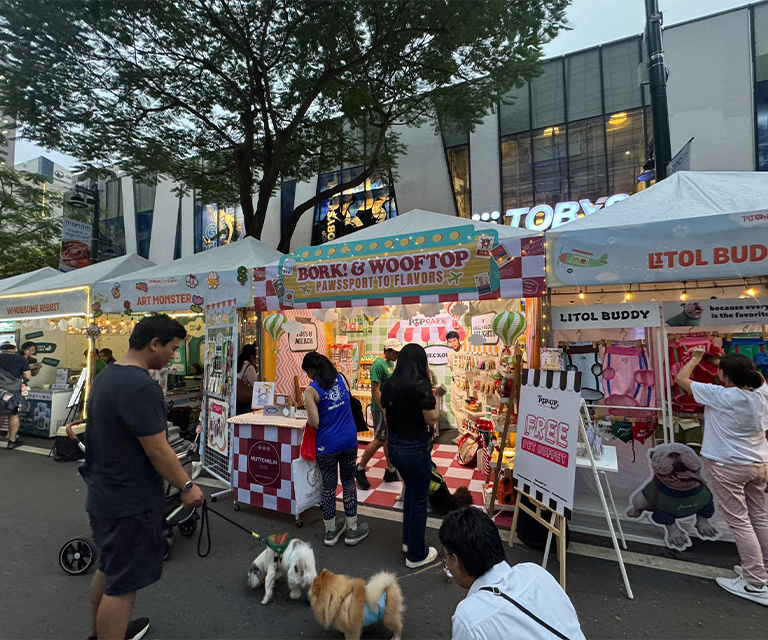
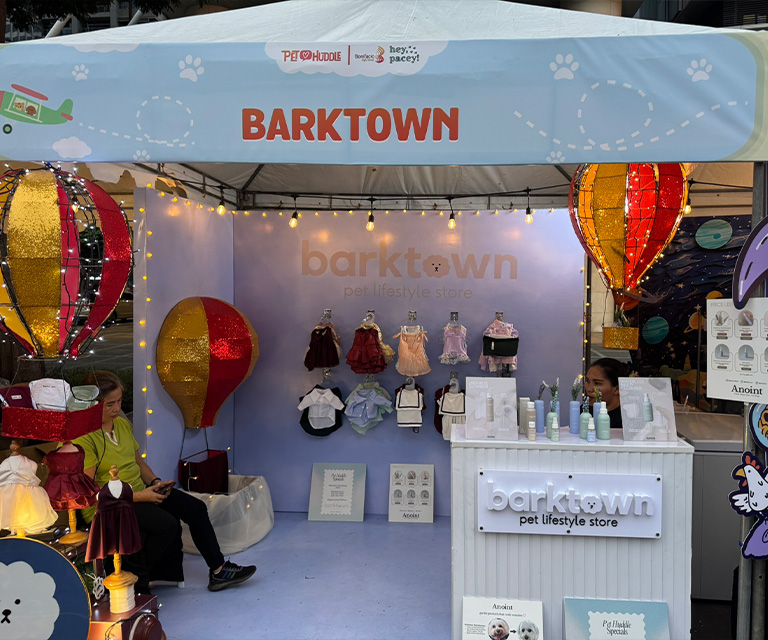
Cities like BGC are leading the shift. On weekends, parts of 5th Avenue transform into open-street pop-ups like Pet Huddle, where local brands showcase treats, grooming products, handmade harnesses, and low-allergen meals. Strollers, carriers, and wagging tails now move through spaces once designed strictly for humans and their shopping bags.
A New Kind of Community
Beyond markets, cafés and malls are adapting: water bowls appear beside pastry counters, pet passes are issued alongside parking tickets, and some malls now offer stroller rentals and designated relief zones. In vertical communities across Metro Manila, condo lobbies host “paw socials” — informal gatherings where pets learn to coexist, and their humans quietly build friendships, routines, and a sense of community.
In places like these, pets aren’t a side note. They’re part of the rhythm of city life — woven into errands, weekends, commutes, and companionship.
For Reese, that only confirms what she’s been feeling all along:
Having a pet isn’t a phase — it’s a home base.

Love Is Evolving — and Accountability Needs to Catch Up
As this trend grows, the conversation isn’t just emotional — it’s becoming structural. In many countries, laws now reflect a shift in how pets are viewed: not as replaceable property, but as sentient companions. Spain and Italy impose fines or jail time for pet abandonment. Several U.S. states classify abandonment as cruelty, recognizing that once the novelty fades, living animals should never become collateral damage for human indecision.
The Philippines isn’t there yet. The Philippine Animal Welfare Society (PAWS) estimates there are around 12 million stray dogs and cats nationwide — a number echoed by the Mars Petcare Homelessness Report, which places the figure closer to 13.11 million. Animal-welfare groups say the trend worsens after the holidays. Shelters refer to January and February as the “post-Christmas surrender season” — when animals gifted with excitement are later returned or abandoned once routines resume and the reality of care sets in.
Legally, the country already prohibits cruelty and abandonment under the Animal Welfare Act of 1998 (amended by R.A. 10631). But enforcement remains weak, and many LGUs lack the systems or support needed to manage stray populations humanely. During a 2024 Senate hearing, advocates described the current reality plainly: animal welfare in the Philippines is held up more by compassion than by structure.
As PETA Asia noted in support of stronger regulation:
“Animal homelessness in the Philippines has reached a crisis point. Every abandoned animal represents a failure of responsibility — not just by an individual, but by a system.”
So before anyone wraps a leash or places a puppy under a Christmas tree, the real question isn’t “Will this make someone smile?” — it’s “Will someone still show up for this life a year from now?”
When Love Requires Responsibility
Love, when it involves another living being, has weight. Most shelters in the Philippines operate at or beyond capacity and run on donations, volunteers, and emotional endurance. Rescue groups report the same pattern every year: impulse buying, lack of training or support, and eventual surrender once vet bills, behavior challenges, or time demands become overwhelming.
If Gen Z is reshaping how companionship looks, then perhaps the next chapter isn’t only tenderness — but accountability. If we believe animals are family, then the way we treat them — in policy, culture, and everyday choices — must reflect that belief with consistency, not just sentiment.
Adopt, Don’t Add to the Problem
As this cultural shift deepens, one question matters more than ever: Where are these pets coming from?
Both PAWS and PETA Asia urge Filipinos to adopt rather than buy — especially from breeders or pet shops prioritizing profit over welfare. Adoption isn’t a trend; it’s an intervention. Every rescued cat or dog means:
-
one less animal living and breeding on the street,
-
one less life at risk of euthanasia due to overcrowding,
-
And one more example of compassion turned into action.
Buying — especially impulsively — risks contributing to a crisis already unfolding in real time. For many young Filipinos, adopting aligns with something deeper: meaningful choices, ethical living, and care that extends beyond convenience.
Soft Hearts, Strong Boundaries
Maybe this shift isn’t rebellion — maybe it’s wisdom. Maybe Gen Z isn’t “too picky,” “too independent,” or “too avoidant.” Maybe they’re simply the first to ask whether love should feel like pressure.
Because living simply — truly simply — means choosing the kind of love that steadies rather than drains. The kind that fits into real, imperfect lives. The kind that allows softness without sacrifice.
The Tita Question
So the next time someone asks, “Why don’t you have a partner yet?” — the answer doesn’t need to be defensive.
You already have companionship.
You already have loyalty.
You already come home to someone who waits by the door, sits beside you through deadlines, and never argues about whose turn it is to take out the trash.
Someone who loves you on the days you shine —
and stays on the days you can’t love yourself well.
Because love — whether romantic or furry — isn’t just about how it starts. It’s about showing up long after the excitement fades, choosing care over convenience, and honoring the life that depends on you.
Sometimes the right kind of love isn’t the one society expects —
It’s the one that lets you breathe, grow, rest, and come home to yourself.
And for Gen Z, that love often arrives with fur, soft eyes, and a tail that says everything words don’t.
Read more Stories on Simpol.ph
Keeping pets cool in scorching heat
ERA NUTRITION: Healthy Eating, Simplified for Every Filipino
Why More Filipino Millennials Are Walking Away From Family Obligations