Before each competition, Cebuano Rubik’s cube champion Leo Borromeo holds the cube in both hands. He exhales slowly. Feels the warmth in his fingers. The room goes quiet. Then—click-click-click—done.
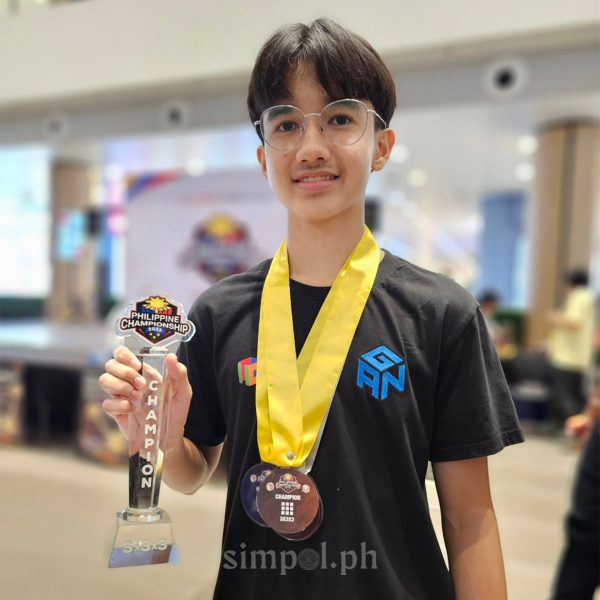
At just 17, Leo has become the Rubik’s Cube champion in the Philippines and one of the fastest in the world. He was ranked the number one speedcuber in Asia in 2018, 2019, 2022. He was also a Rubik’s Ambassador and is currently a “Gan Guru” – an endorser of the famous Gan Cube.
But this story doesn’t start with records. It starts with a screen—and a spark.
Before Leo ever stepped into a competition, the Rubik’s Cube already had decades of history behind it. Invented in 1974 by Hungarian professor Ernő Rubik, it became a global icon in the 1980s—spotted in toy stores, classrooms, and office desks alike. For most, it was a nostalgic curiosity. But over the years, it quietly evolved from a playful puzzle into a competitive sport.
Speedcubing—solving the cube as fast as possible—now boasts its own world rankings, pro gear, livestreamed tournaments, and a tight-knit community. It’s this world Leo discovered on YouTube. And then, step by step, entered himself.
He was seven. No coach. No playbook. Just curiosity—and YouTube.
How It Started: One Solve, One Spark
“That’s when I got serious. I wanted to be faster. Better.”
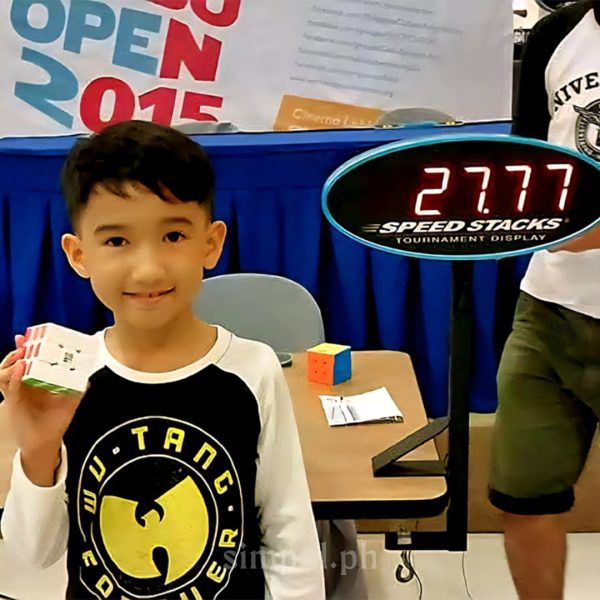
Leo’s first competition came at age eight. He didn’t win—but he was hooked. Watching other kids solve in under 10 seconds flipped a switch.
He began practicing daily—two hours on school days, up to four hours on weekends. Today, he clocks in about 400 solves a day (TheCubicle).
That’s one every 90 seconds—about six focused hours a day. Most teens scroll. Leo solves.
His gear of choice? A GAN 356 XS cube, fine-tuned and customized to match his precise style of solving.
What Parents Can Learn from Leo
Speedcubing might seem like a niche hobby. But it’s really a masterclass in focus, discipline, and calm under pressure.
Leo’s mom never pushed him. But she showed up. Quietly. Faithfully. She made space for his practice, cheered from the sidelines, and trusted his process.
“We just told him to enjoy, relax, and remember—win or lose, we’d always be proud of him.” —Sheryl Osmeña-Borromeo
Even when she didn’t fully understand the world of speedcubing, she believed in her son’s passion.
For parents raising curious kids, the lesson is simple: Notice what lights them up. Then clear the path. Whether it’s cubing, coding, dance, or design—drive starts from within.
Subscribe to Leo’s Channel
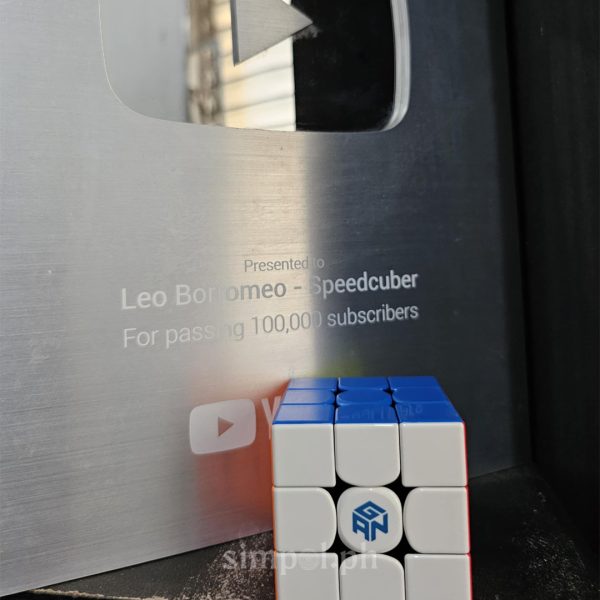
Want to see how one of the world’s fastest cubers trains? Watch Leo’s solves, tutorials, and competition highlights on his YouTube channel. Subscribe to Leo Borromeo on YouTube
The Power of Breathing (Yes, Really)
“When I’m competing, I try not to think about anything at all. I focus on my breathing. I check if my hands are warm.”
Leo doesn’t just train his fingers. He trains his focus.
In a world moving at full speed, Leo’s gift is knowing when to slow down.
Simple. Grounded. Repeatable. A reminder that calm is a skill—one that can be practiced.
His routine may be quiet, but it’s deliberate. And it’s part of what makes him a champion—not just in speed, but in mindset.
Beyond Cubing: Music, Math, and the Long Game
Leo isn’t just a cube kid.
He plays guitar. Loves Nirvana and Jimi Hendrix. He’s part of his school’s math varsity team, and has a deep love for logic, strategy, and systems.
He’s also friends with fellow cubers across the region. People like Sean Patrick Villanueva and Toby Litiatco—other Filipino teens building their own legacies in a sport that rewards persistence.
Speedcubing gave Leo a platform. But more than that, it gave him a mindset: methodical, resilient, and curious. Skills that go beyond tournaments—and into life.
A Day in Leo’s Solves
What does 400 solves a day look like? It starts early. A few warm-up solves in the morning. After school, a few hundred more—each one timed, tracked, and reviewed.
“Sometimes, even when I’m tired, I still want to do just five more solves. It helps me reset.”
He doesn’t just twist mindlessly. He analyzes.
Like a musician practicing scales or an athlete watching film, Leo treats the cube like a canvas and a discipline.
It’s passion—but it’s also a system. The kind that builds champions.
What It All Adds Up To
And in the end, maybe it’s about looking at things a little differently.
What if we stopped treating kids’ obsessions as distractions?
What if we saw them as clues—into how they think, what they value, and who they might become?
Leo Borromeo didn’t just break records. He built a habit. A way of thinking. A quiet confidence that comes from solving something difficult, one side at a time.
So the next time your child dives deep into something—Minecraft, sketching, music production—don’t pull them out.
Lean in. Watch what lights them up. And ask: What side are they trying to solve?
Leo Borromeo didn’t just break records. He built a habit. A way of thinking. A quiet confidence that comes from solving something difficult, one side at a time.
So the next time your child dives deep into something—Minecraft, sketching, music production—don’t pull them out.
Lean in. Watch what lights them up. And ask: What side are they trying to solve?
Follow Leo: facebook.com/LeoSpeedcuber | WCA Profile