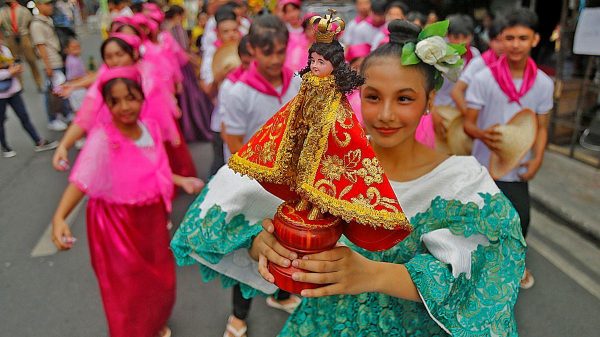
MANILA — On the third Sunday of January, Tondo wakes differently. For 2026, the pulse is even more profound; only months ago, the Vatican officially elevated the parish to the rank of Minor Basilica, a title honoring its 454-year history as the home of the second-oldest Santo Niño image in the Philippines. The narrow streets of this sprawling district do not merely hum—they throb. Vendors sweep curbsides as incense curls through the air, and the faint strains of brass and tambourine announce that devotion has arrived. Children in bright shirts run past shuttered sari-sari stores, dragging along small replicas of the Santo Niño, while elders position candles on the low concrete altars that dot every corner.
This is not a quiet ritual. It does not ask for restraint. The Santo Niño de Tondo insists on proximity, on participation, on the full weight of presence.

The Devotion That Moves
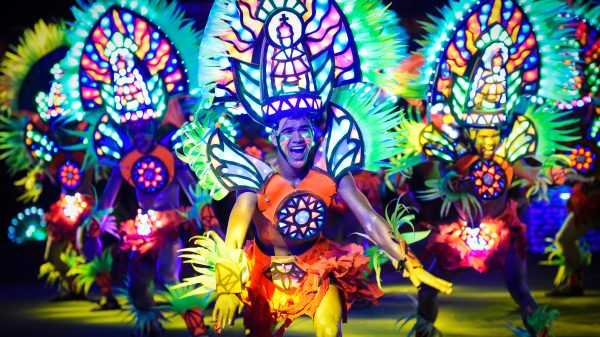
Pilgrims and locals alike gather along the narrow streets, pressing forward as chants rise: “Pit Señor! Viva Santo Niño!” It is a call that twists through alleyways, bouncing off corrugated metal and crumbling walls, thickening with every voice that joins. This year, the Lakbayaw Procession—the traditional “dance-walk”—drew thousands of devotees who paraded their personal replicas through the streets of Pritil and Herbosa. The rhythm is improvisational yet disciplined, a community learning how to move together through sweat, heat, and anticipation.
The Santo Niño de Tondo is a figure of continuity. While the city around it changes—buildings rise and fall, streets flood, and economies wobble—the devotion here has remained tactile, insistently present. The statue is small, wooden, and gilded, yet its effect is immense. Carried on shoulders and cradled in arms, it dictates the pace of processions, the shape of prayers, and even the pause of a street hawker, momentarily still to offer reverence.

Where the Sacred Intersects with the Everyday
In Tondo, religion is inseparable from the daily grind. The same streets that host vibrant processions also witness traffic snarls, the clatter of jeepneys, and vendors negotiating with a practiced intensity. This year, the intersection of faith and modernity is visible in the colorful banderitas (buntings) that crisscross the alleys. While environmental groups like the EcoWaste Coalition have urged a reduction in single-use plastic decorations, the community’s desire for a pabonggahan(extravagant) celebration remains a point of local pride.
Devotion here does not require removing oneself from life—it is life itself, intensified. A mother balances groceries while pressing a small candle to a makeshift altar; a teenager films a slow-motion reel of the procession on their smartphone, fingers slick with melted wax. Faith and modernity coexist, awkwardly but harmoniously, in the hot Manila sun.

A Community Anchored in Ritual
Observers may mistake the chaos for disorder; the truth is far more deliberate. Every chant, step, and pause has a rhythm born of decades of repeated devotion. The body becomes the instrument of belief. Walking, dancing, kneeling, lifting—these are the ways that grace is both sought and felt. In these moments, social divisions—the distinctions between rich and poor, old and young, local and visitor—loosen. Everyone becomes equal before the small, smiling child in gold robes.
Even when Manila’s challenges are visible—the traffic, the flooding, the overcrowded streets—the festival provides a framework for patience, endurance, and collective resilience. The late historian Resil Mojares wrote that Filipino devotion is theatrical because it insists on being felt in the body. Here in Tondo, that insistence is undeniable. Sweat mixes with incense; voices hoarse from chanting testify to the intensity of participation; hands burn from candle wax, yet refuse to let go. Faith is not a passive act. It is carried, lifted, pushed, and, when necessary, endured.

Why the Ritual Endures
By evening, the streets are a mosaic of melted wax, discarded flower petals, and tired shoes. Yet, beneath the exhaustion, there is clarity. The Santo Niño de Tondo does not erase life’s difficulties. It does not fix leaking roofs or flooded streets. But it offers something equally essential: a rhythm, a community, a shared way of waiting and hoping.
As the 2026 feast culminates in the grand evening procession, Manila becomes more than a chaotic city—it becomes a congregation in motion, a space where devotion is expressed through movement, endurance, and the shared physical insistence of faith. When night falls, processions dissolve into side streets, and candles burn low. But the memory remains. Devotion is not measured in quiet reflection alone. Here, it is measured in proximity, sweat, and song—a testament to the enduring power of the Santo Niño de Tondo.
Read more Stories on Simpol.ph
Buling-Buling: Where Faith Moves in Rhythm
Where Faith Takes to the Street: The Enduring Pulse of Ati-Atihan