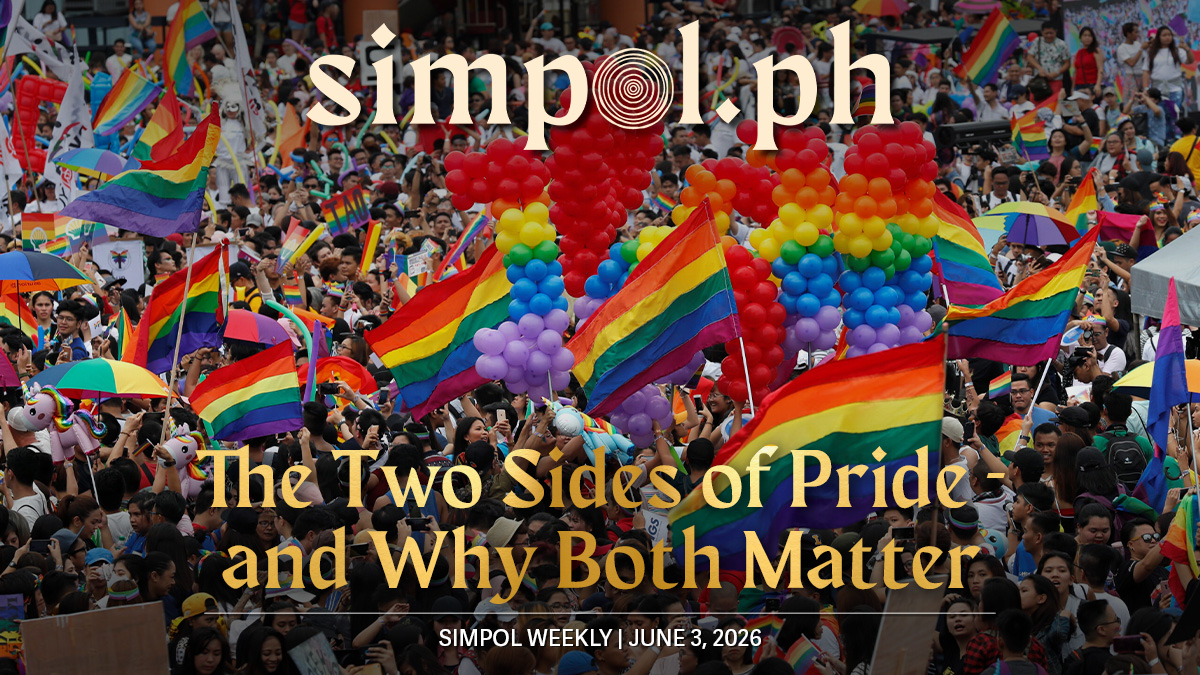
Pride is one of those words that tends to get reduced to one of two readings.
Either a joyful street party, or an act of political defiance.
Both are right, and both are incomplete.
Pride exists in the tension between what is being celebrated and what is still being fought for. It neither resolves that tension nor apologizes for it – it simply shows up, year after year, and holds it in the open.
Here in the Philippines, it carries particular weight.
The Name You Didn’t Choose
There is something quite radical about the act of naming yourself – about stepping outside the labels given to you and deciding, on your own terms, who you are.
For most of human history, those on the margins of society have been named by those at the center. Many queer Filipinos will tell you that the first vocabulary they had for who they were came from outside themselves: from the schoolyard, from noontime television, from the shape of silences at home that were somehow louder than words.
These messages accumulate over time, shaping not just how others see a person, but how a person comes to see themselves.
Pride, understood this way, is the act of refusing these inherited definitions. It is a community asserting the right to name itself, and in doing so, openly, collectively, and without apology.
Older than Stonewall
The Philippines has its own queer history, one that predates Stonewall by centuries.
In pre-colonial Filipino communities, spiritual figures called babaylan occupied a space between genders that their societies not only accepted, but respected. Also known as asog or bayoguin, they served as healers, diviners, and community leaders, some of whom lived outside the gender binary in ways their communities accepted without question. As far back as pre-colonial times, gender variance was understood as part of the natural order rather than a deviation from it.
Queer identity in the Philippines, in other words, has always been present in our society.
The Conditional Acceptance
The Philippines is frequently described as one of the more LGBTQ+-accepting countries in Asia, and that reputation is not unfounded.
Queer Filipinos are visible in entertainment, pop culture, and everyday life in ways that remain uncommon elsewhere in the region.
But there is a meaningful difference between being tolerated and being embraced. Tolerance asks nothing but to look the other way.
Genuine acceptance builds conditions in which people can live with full dignity, including legal protections that make that dignity enforceable.
The gap between perception and reality shows up clearly in the workplace. Research on LGBTQ+ workers in the Philippines describes environments where formal inclusion policies exist alongside persistent informal discrimination.
Where a company’s values statement says one thing and the day-to-day culture says another. Promotions quietly withheld, offhand comments left unchallenged, the performance review that mentions “professionalism” without quite saying what it means – they are the ordinary texture of a tolerance that has not yet become genuine acceptance.
25 Years and Counting
The SOGIESC Equality Bill would make discrimination on the basis of sexual orientation, gender identity, expression, and sex characteristics illegal in the Philippines. It has been refiled in Congress every session since the year 2000 and has never been passed, making it the longest-pending bill in Philippine legislative history.
That fact alone explains why Pride in the Philippines cannot afford to be only a celebration. The march exists, in part, because the legislature has not yet acted – and because the community has learned, over twenty-five years of waiting, that visibility without legal protection is an incomplete kind of freedom.
The Tension Is the Point
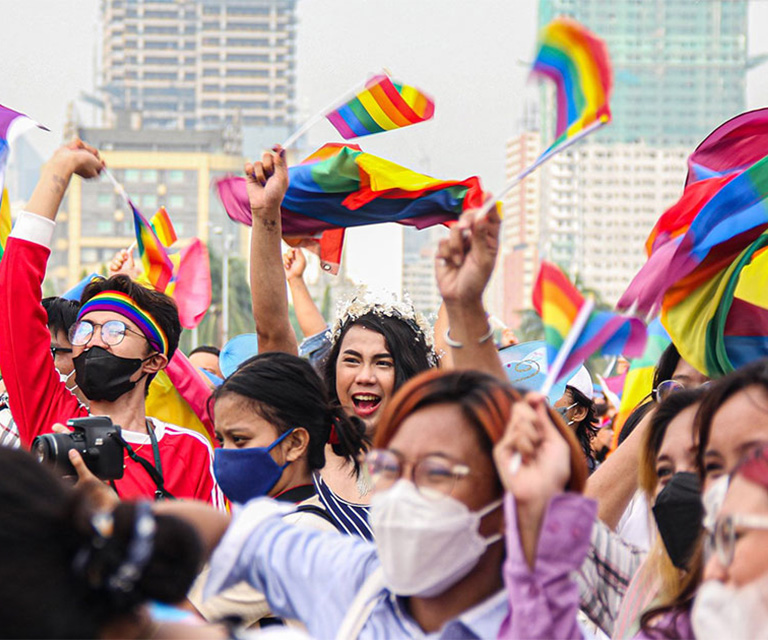
Pride does not resolve the tension between celebration and protest. What it does is hold that tension in public, year after year, refusing to let either side of it disappear – because to celebrate without acknowledging the fight would be dishonest, and to protest without celebrating what has been built would be equally incomplete.
In the Philippines, both sides of that tension are fully alive. The community that marches every June is the same community that has survived exclusion, pushed for legislation, and continued to show up in a country that has extended them visibility without always extending them protection.
Pride, here, is the refusal to pretend that one of those things cancels the other out.
The tension remains. The work continues.
And every June, Pride returns—not to resolve that tension, but to ensure that it is seen, remembered, and carried forward.
Read more Stories on Simpol.ph
MGI All Stars 1st Edition: A New Era of Returning Queens and Reinvented Glory
Chef Tatung Launches Tatung’s at Gateway Mall
VVINK Narrates the Intersectionalities of Young Adulthood with their Full Album Debut