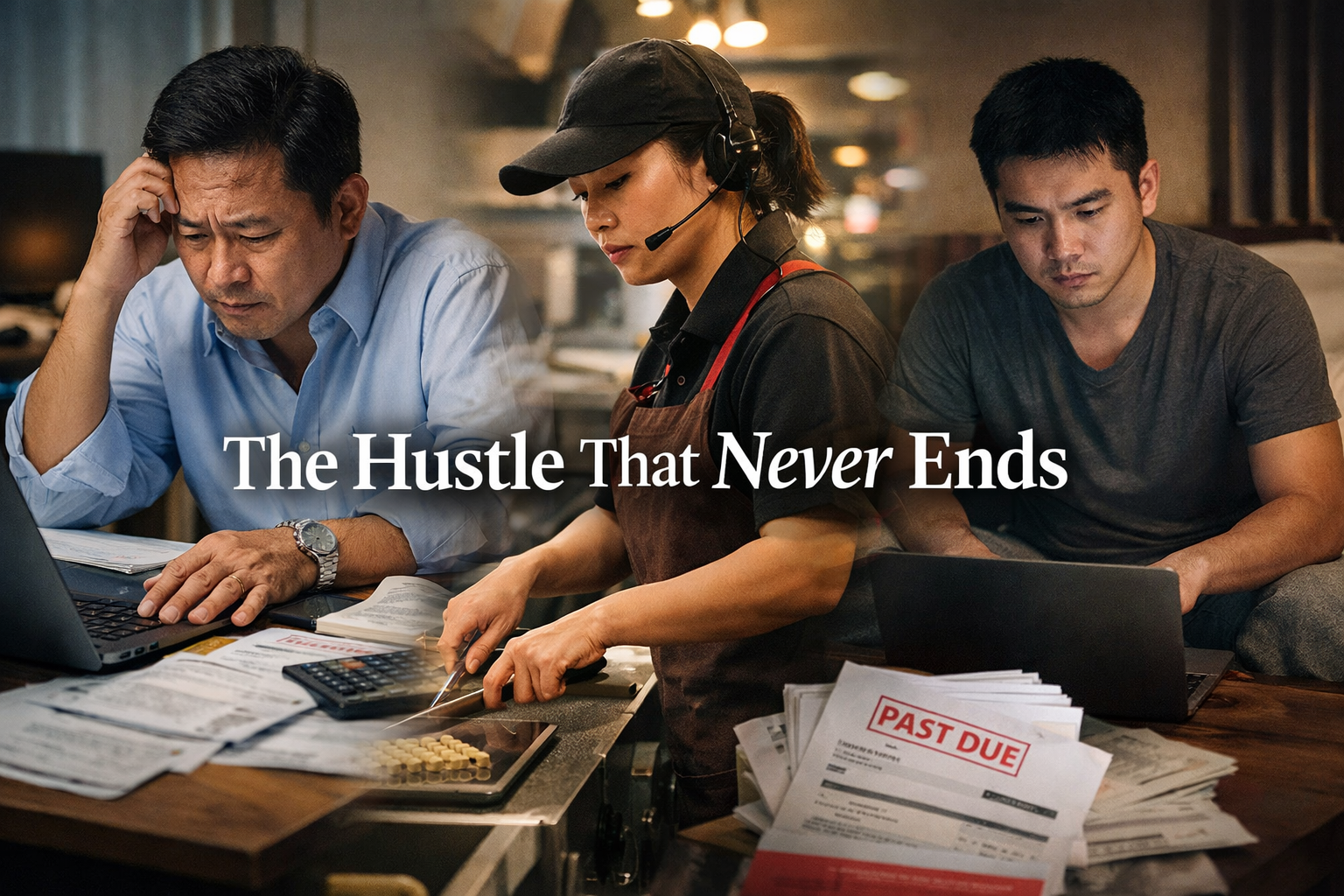
In many households today, working longer hours no longer guarantees comfort. As the cost of food, utilities, transportation, and daily essentials continues to rise, many people find themselves taking on multiple jobs or side hustles simply to keep up with everyday expenses. For readers, this reality is more than a distant economic issue; it reflects the everyday pressure to balance survival, responsibility, and personal well-being.
Understanding this growing culture of nonstop work matters because it affects how people live, spend, and care for themselves. When income barely keeps pace with rising expenses, the idea of rest, self-care, or even small personal rewards becomes difficult to justify. Examining this reality allows us to reflect on how modern work shapes our lives—and what might need to change.
The Hustle That Never Ends
For many workers, the routine has become predictable: work during the day, take on additional freelance work or side gigs at night, and repeat the cycle the next morning. The intention is simple—to provide for family, cover bills, and maintain financial stability. Yet the pace often leaves little room for rest.
Daily necessities have grown increasingly expensive. Groceries cost more, electricity bills rise, and transportation fares continue to climb. These increases push workers to stretch their income further than ever before. In response, many adopt a “trabaho lang nang trabaho, raket lang nang raket” mindset—work continuously, take every opportunity to earn, and hope it will be enough.
However, the reality is that constant work does not always translate into financial relief. Instead, it often leads to exhaustion and emotional strain.
Providing for Others, Forgetting Ourselves
Behind the long hours is a quiet sacrifice. Many people focus so heavily on providing for their families that they rarely spend their earnings on themselves. Even small personal desires—buying new clothes, enjoying a favorite meal, or taking a short break—are often postponed.
The priority becomes clear: bills first, responsibilities second, and personal needs last.
This situation raises an unsettling question: If people work so hard to earn money, why do so many rarely enjoy it?
The answer often lies in the growing gap between income and expenses. Workers must allocate their earnings to rent, utilities, education costs, and food before anything else. By the time these needs are covered, little remains for rest or personal fulfillment.
The Paradox of Earning Yet Owing
A conversation among coworkers sometimes captures this irony perfectly. One employee jokingly said, “Before I didn’t have work, I didn’t have debt. Now I have a job, but I still have debt.”
The remark often triggers laughter because it sounds absurd. Yet beneath the humor lies a familiar reality. Employment brings income—but also new responsibilities, loans, and expectations.
Many workers find themselves earning more than before yet feeling financially trapped. Credit payments, rising living costs, and social pressures create a cycle in which increased income does not necessarily lead to financial freedom.
The Human Cost of Constant Work
Working without rest carries consequences beyond financial stress. Long hours and chronic fatigue can affect physical health, emotional stability, and overall quality of life.
According to the International Labour Organization, excessive working hours remain a serious global issue. In a joint study with the World Health Organization, the organizations emphasized the risks of prolonged work schedules. Gilbert Houngbo noted, “Long working hours can have serious consequences for workers’ health, well-being, and productivity.”
This insight reflects a broader concern: productivity may increase in the short term, but without balance, both workers and workplaces eventually suffer.
A Society Always in Motion
Another observation often emerges when workers reflect on their situation. People who are constantly busy sometimes look at others—those who appear to travel, relax, or spend time with friends—and wonder how they manage it.
The comparison creates a quiet tension. Workers ask themselves whether nonstop effort is truly the only way to survive in modern society.
Are we still living, or are we simply working?
The question may sound philosophical, but it highlights an important social concern: when survival becomes the primary goal, the meaning of work itself begins to change.
Rethinking the Value of Work
The culture of endless hustle has become a defining experience for many people today. Yet it also invites reflection. Work should ideally provide stability, dignity, and the ability to enjoy life—not simply maintain a cycle of obligation.
Recognizing this reality is important for both workers and society. Conversations about fair wages, financial literacy, work–life balance, and sustainable living are increasingly necessary in a world where the line between productivity and exhaustion grows thinner each year.
For readers, the message is both personal and universal. Working hard remains admirable and necessary, but life should not become a race that ends only in fatigue. The challenge moving forward is finding ways to ensure that work supports living—not replaces it.
Read more Stories on Simpol.ph
When Making a Living Feels Like Dying: The Hidden Cost of Running a Business in the Philippines
Raket Nation: How Filipinos Turned Survival into a Way of Life
Less Tax, More Ulam: The Fight to Cut Your Electric Bill VAT