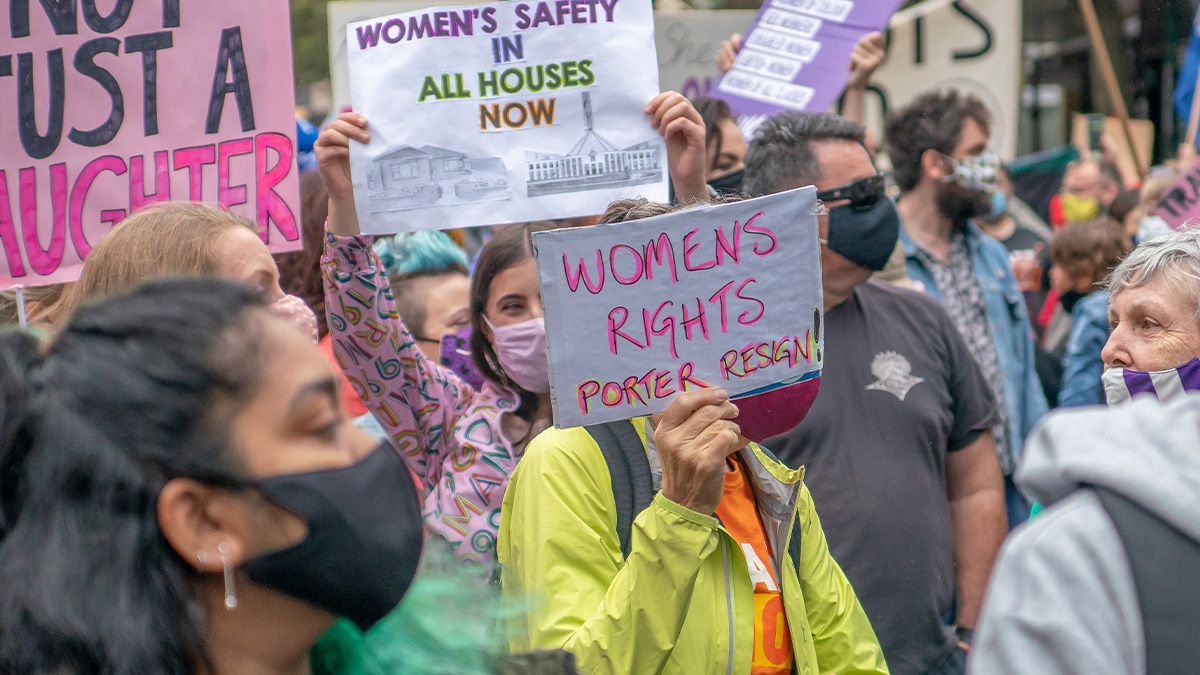
What comes to mind when we hear the word “women”? “Weak, innocent, and dependent” or “strong, bold, and independent”? This is a question worth reflecting on as we celebrate National Women’s Month 2026 Philippines.
Back then, women were taught to obey and focus on being graceful, innocent, and dependent due to the prevalence of patriarchy. Over time, however, these societal stereotypes have slowly been transformed generation by generation. Women broke free from expectations and embraced the boldness and power required to fight for their rights. They learned to read, write, vote, work, and live as freely as they wished. Yet even with newfound freedom, restrictions and discrimination continue to affect women.
Freedom and rights were not given lightly—they were fought for over decades through protest, activism, and advocacy. Between 1909 and 1911, working women rallied for labor rights and gender equality in response to low wages, harsh working conditions, and inadequate labor legislation. The movement intensified after over 140 young women died in a fire at the Triangle Shirtwaist Factory in March 1911. This tragedy marked a global commemoration of International Women’s Day (IWD), leading Clara Zetkin and the Socialist Women’s International to designate March 8 as a day to recognize women’s labor rights—a cause that eventually expanded to encompass the overall rights of women (Philippine Commission on Women, n.d.).
Every March 8, and throughout the month of March, Women’s Month is commemorated worldwide to recognize women’s rights, achievements, and progress against enduring inequalities. In the Philippines, the Philippine Commission on Women (PCW) leads the annual celebration of National Women’s Month. Purple, long associated with the movement, represents justice, hope, and dignity in the pursuit of equality. This color carries the spirit that enduring inequalities against women are being challenged. The celebration is not merely symbolic; it is both resistance and recognition that women should not be reduced to their gender. It serves as a reminder that everyone—women and men alike—is entitled to rights and freedoms without compromise.
A Month Fostering Empowerment, Boldness, and Advocacy
National Women’s Month 2026 in the Philippines began with the transition into March. This year’s celebration is led by the PCW, under the theme “WE for Gender Equality and Inclusive Society.” The initiative aims to ensure that Filipinos have equal opportunities and rights, equipping them to participate fully in an inclusive and innovative economy.
The celebration is not confined to March. It serves as a call to government agencies, universities, and organizations to promote gender equality and an inclusive environment for women. The PCW also highlighted a sub-theme, “Lead like the Babaylans, Filipinas!,” which emphasizes Filipinas’ natural leadership qualities equal to men, reflecting a crucial aspect of Filipino identity.
Pre-colonial leaders, known as Babaylans, led with compassion, empathy, wisdom, and moral guidance. Their leadership demonstrated that approaching people with care, while upholding principles and values, fosters an inclusive community. By connecting women’s empowerment to pre-colonial leadership, the PCW highlights the enduring relevance of Babaylans’ qualities and empowers contemporary Filipinas to embrace leadership grounded in history and culture.
2026 National Women’s Month Activities
The kick-off ceremony began on March 6 at the Rizal Memorial Coliseum in Malate, Manila, led by the PCW. Events included presentations, speeches, fairs, and activities that shared the government’s vision for Women’s Month. The ceremony honored Filipino women as fundamental contributors to an inclusive society.
PCW also launched digital storytelling through #SheSays, showcasing women’s stories, achievements, and leadership to inspire Filipinos nationwide. Various sectors and organizations also organized programs.
The Filipino Circle Center (FCC) hosted its third annual Women’s Run PH, co-presented with SM Supermalls. The event started on March 8 at SM Mall of Asia. FCC aims to empower and unite women through running. Founder Nicole de la Cruz stated, “She aims to break barriers, challenge stereotypes, and encourage women to push beyond their limits through collective love for running.”
Meanwhile, the University of the Philippines (UP) scheduled programs starting March 2, including workshops for student organizations on creating safe spaces. Free services for women 21 and older, such as birth control insertion and removal and Pap smears, began March 4. A community bazaar ran from March 9 to 13, alongside a lecture on feminist photography on March 9. Seminars, workshops, sports events, leadership programs, and social engagement activities continued until March 24. UP’s programs focus on women’s empowerment, health, creativity, and identity.
Across the country, Women’s Month is celebrated throughout March, with each sector tailoring programs to advocate for gender equality and women’s rights.
Woman Empowerment in 2026: Progressing or Regressing?
While the celebration of womanhood has become normalized globally, representation and recognition do not guarantee acceptance. Historically, women were excluded from inclusive spaces and denied opportunities to lead and influence.
Today, women no longer wait for validation—they assert themselves in leadership roles and positions of influence. In 2026, Filipino women boldly occupy spaces that once restricted them, from conferences and classrooms to creative industries, government, business, and politics. Their presence and influence are undeniable.
Yet challenges persist. Leadership by women is often questioned—resistance is misinterpreted as hostility, and firmness as emotional weakness. Although industries are opening to women in traditionally male roles, acceptance remains uneven.
Cultural shifts have encouraged women to speak openly about mental, reproductive, and physical health, yet issues persist. Objectification and harassment, including in digital spaces, continue. For instance, Anne Curtis experienced inappropriate remarks from a politician, prompting artists like Jodi Sta. Maria and Jasmin Curtis-Smith to defend her. Jasmin wrote, “This moment is not about one female celebrity. It is about how all women, regardless of profession, continue to be reduced to bodies in spaces dominated by men in power.”
Despite progress, gender-based violence, financial dependence, and restricted reproductive rights still affect many, particularly in rural and marginalized communities.
A Celebration and Confrontation of a Long-standing Movement
National Women’s Month is not only a celebration but also a confrontation of social issues long overlooked. It recognizes how far women’s rights movements have come while highlighting areas needing attention. Equality, reproductive health, identity, and gender roles remain ongoing concerns.
In 2026, the PCW emphasizes that Babaylan qualities persist in contemporary Filipinas—not only as symbols of leadership, strength, and hope but also as forces for continued change.
Empowerment is amplified through the spectrum of purple, visible in digital and personal spaces throughout March. The color, theme, and message reinforce the ongoing fight for women’s rights. Though March marks the official celebration, empowerment extends beyond a single month, living in individuals’ actions and advocacy.
Being a woman is not confined by a calendar; empowerment encompasses both personal and political dimensions. The fight for equality continues—not only within government, organizations, and industries—but also within ourselves.
References
Philippine Commission on Women. n.d. “History of Women’s Rights in the Philippines.” Accessed March 6, 2026. https://pcw.gov.ph.
Read more Stories on Simpol.ph
NAT’L WOMEN’S MONTH 2025: A call for kindness, inclusion
Women Take Center Stage: GNN’s Lilet Fair Champions Equity in Philippine Music
Edges of Identity: ena mori’s Ore Marks a Defining Turn in Asian Pop